
Why Is My Check Engine Light Flashing?
A flashing check engine light usually means a serious misfire: fuel that isn’t burning in the cylinder is going out into the exhaust, where it can overheat and damage the catalytic converter. Ease off the gas, skip the highway if you can, and get the car checked as soon as it’s safe.
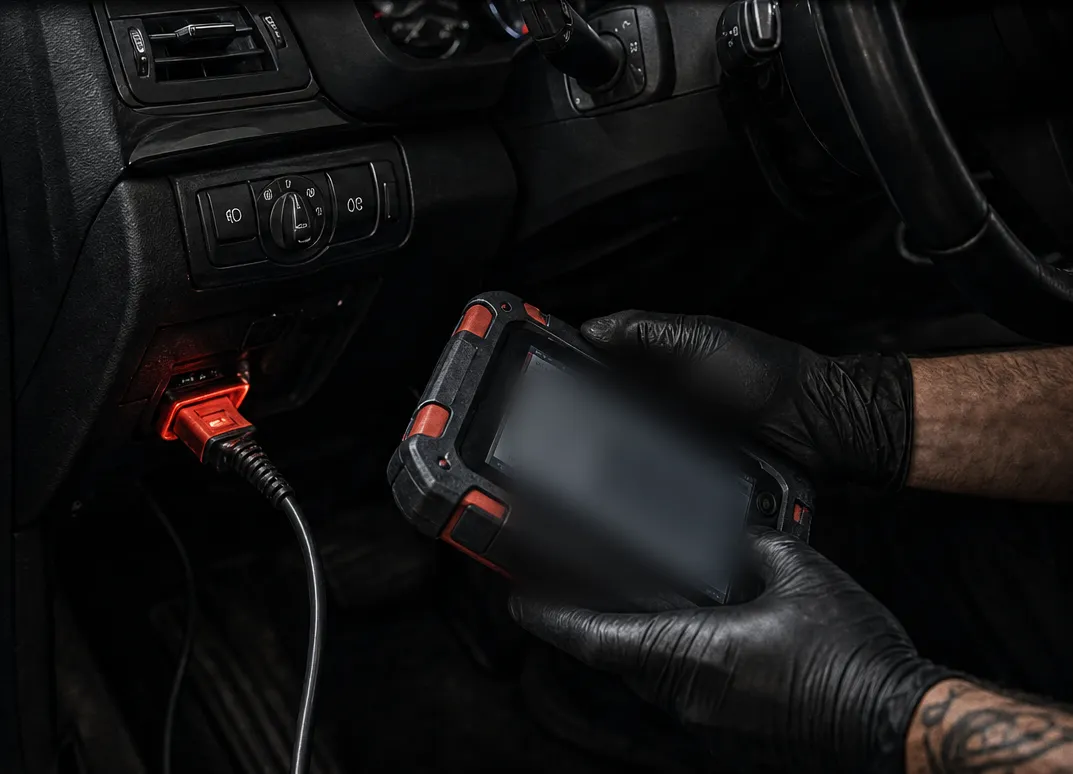
Steady vs. Flashing: Big Difference
A steady check engine light means the computer stored a fault. A flashing one means the fault is happening right now and it’s bad enough that the car is warning you to back off. Most of the time that’s a misfire.
A misfire means one or more cylinders aren’t firing properly. Common causes are a failing ignition coil, a worn spark plug, a clogged or leaking fuel injector, or a vacuum leak throwing off the fuel mixture. You’ll often feel it: shaking at idle, stumbling when you accelerate, a loss of power.
The reason we say stop driving hard isn’t drama. Unburned fuel heats up the catalytic converter fast. A coil is a relatively small repair. A melted converter is not. Pushing a car with a flashing light is how a small bill turns into a big one.
When it comes in, we read the codes, look at live data to see which cylinder is misfiring, and test the parts instead of replacing them on a hunch. Swapping a coil to another cylinder and seeing if the misfire follows it is a classic, cheap test that tells you a lot.
What to Do Right Now
If the light starts flashing on the highway, move to the right lane, ease off and get off at the next safe exit. Avoid hard acceleration and heavy loads. If the car is shaking badly, losing power or you smell something hot, pull over somewhere safe and call for help instead of limping it along.
Before you call, note what was happening: cold engine or warm, idling or accelerating, rain or dry. Misfires that only show up in damp weather, for example, can point toward ignition parts. Those details help a mechanic get to the cause faster and cheaper.
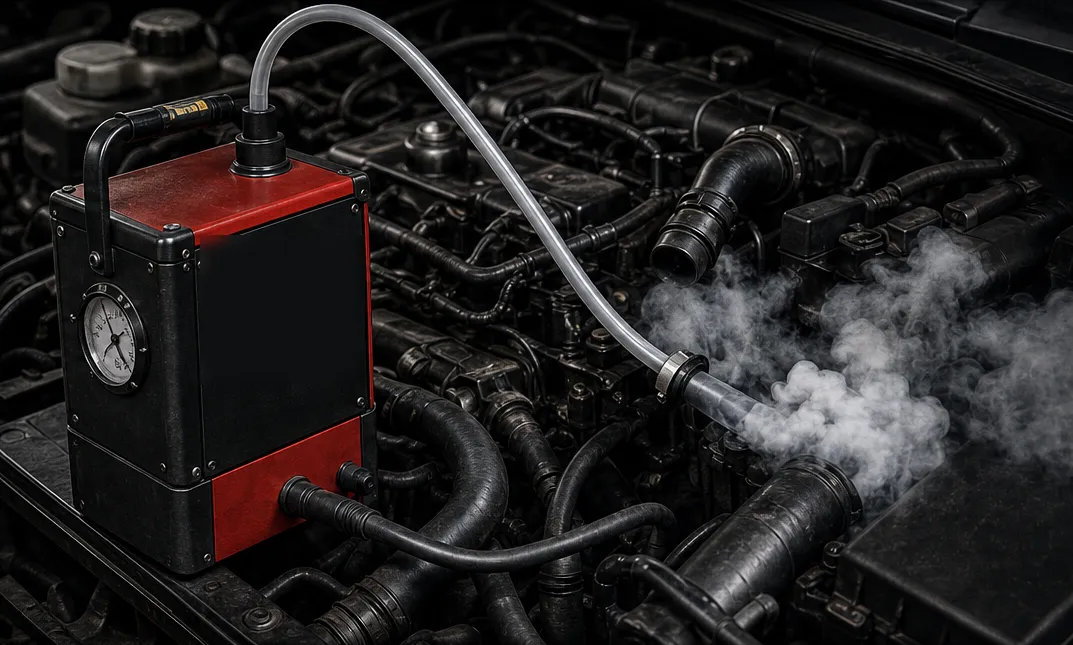
Now, Soon or Fine for Now
How a flashing light usually sorts out once the car is diagnosed:
Every car is different, which is why we inspect before we quote. See how we handle car diagnostics on our car diagnostics page.
Repair Report
- Now Misfire from a failed ignition coil
- Soon Spark plugs on the other cylinders aging
- Fine for now Catalytic converter tests OK
Example report. Yours lists what we actually find on your car.
Quick Answers
Can I drive with a flashing check engine light?
Only as far as you need to get somewhere safe or to the shop, gently. Driving hard with a flashing light risks damaging the catalytic converter.
What is the most common cause of a flashing check engine light?
An engine misfire, often from an ignition coil, spark plug, fuel injector or vacuum leak. A scan and some testing pinpoint which one.
Will the light go off on its own?
It may stop flashing if the misfire comes and goes, but the fault is still there. Get it diagnosed rather than waiting it out.
Can bad gas cause a flashing check engine light?
Contaminated or very low-quality fuel can cause misfires in some cases, but it is far less common than ignition or fuel delivery problems. A diagnosis tells you which it is.
Want Us to Take a Look?
Price before we touch it. Nothing done without your OK.